
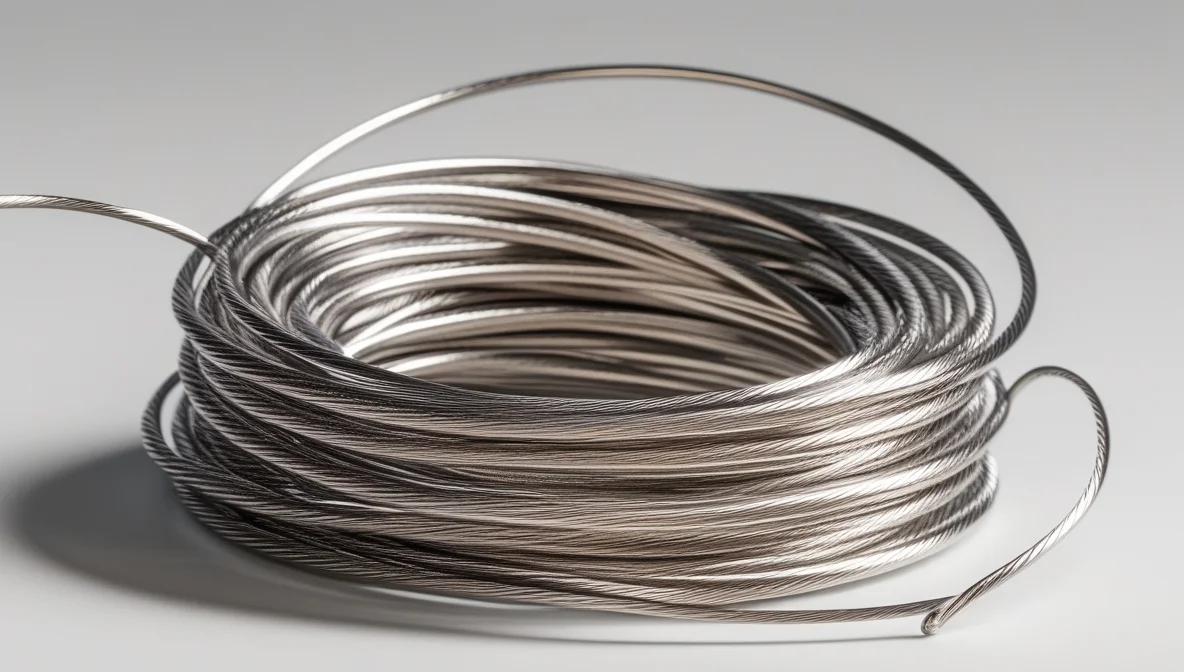
The “best” wire to make a spring depends entirely on the spring’s intended use, operating environment, required performance characteristics (strength, fatigue life, temperature resistance), and budget.


Here are some of the most common and effective types of wire used for making springs:
- Music Wire (ASTM A228): A high-carbon steel wire. Often the default choice for high-stress, high-fatigue life applications where corrosion is not a major concern. Known for its high, uniform tensile strength. Relatively inexpensive. Needs protection (plating/oiling) against rust.
- Oil Tempered Wire (e.g., ASTM A229 – Class I/II): A general-purpose carbon steel spring wire. Less expensive than music wire and suitable for many applications, but with slightly lower tensile strength and fatigue life. Also requires corrosion protection.
- Hard Drawn MB Wire (e.g., ASTM A227): A lower-cost carbon steel wire used for springs under average stress and static loads. Not typically recommended for critical or high-cycle applications. Needs corrosion protection.
- Chrome Vanadium Alloy Steel Wire (ASTM A231/A232): Offers high strength, good fatigue life, and better performance at slightly elevated temperatures compared to carbon steels. Often used in engine valve springs and other high-duty cycle applications. Needs corrosion protection.
- Chrome Silicon Alloy Steel Wire (ASTM A401): Similar to Chrome Vanadium but generally offers slightly higher strength and better performance at elevated temperatures. Suitable for shock loads and high-stress applications like automotive clutch springs. Needs corrosion protection.
- Stainless Steel Spring Wire (e.g., AISI 302, 304, 316, 17-7PH): The primary choice when corrosion resistance is required. Also used for food/medical applications, or specific temperature ranges.
- 302/304: Good general-purpose corrosion resistance and strength.
- 316: Superior corrosion resistance, especially against chlorides.
- 17-7PH: Very high strength (approaching carbon steels) combined with good corrosion resistance and higher temperature capability. More expensive.
- Phosphor Bronze / Beryllium Copper: Used in specialized applications requiring good electrical conductivity, non-magnetic properties, or specific corrosion resistance not met by stainless steels. Beryllium copper offers good spring properties but is expensive and carries health considerations during processing.
How to Choose:
- Environment: Is corrosion a factor? (If yes, lean towards stainless steel or non-ferrous alloys).
- Stress/Load: How high are the stresses? How many cycles must it endure? (High stress/cycles favor Music Wire, CrV, CrSi, 17-7PH).
- Temperature: Will it operate at high or low temperatures? (Specific alloy steels or stainless grades are better for temperature extremes).
- Cost: What is the budget? (Carbon steels are generally cheapest, followed by standard stainless, then high-strength stainless and specialty alloys).
- Other Factors: Magnetism? Electrical conductivity? (May require stainless or non-ferrous alloys).
For general high performance, Music Wire is often considered the “best” if corrosion isn’t an issue. If corrosion resistance is key, stainless steel (appropriate grade) is the best choice.
What is the best wire to make a spring? — This article provides a practical buyer‑focused overview with specifications, selection tips, and on‑site considerations. Explore related topics: blog.
Key Specifications and Standards
- Standards: ASTM / EN / JIS (e.g., ASTM A240/A36, EN 10088/10025, JIS G4304/G3131).
- Surface options: 2B, BA, No.4, HL, mirror; galvanized (electro / hot‑dip).
- Processing: hot‑rolled, cold‑rolled, annealed & pickled, welded or seamless.
- Typical services: slitting, shearing, cut‑to‑length, drilling, beveling, deburring.
- Documentation: MTC, CO, packing list with net/gross weight and heat numbers.
Typical Applications
Construction, machinery, automotive, energy, enclosures and fencing, food equipment (for stainless), and general fabrication. Match grade and finish to corrosion, strength, and appearance requirements.
Selection Guide
- Use certified material with Mill Test Certificate (MTC).
- Confirm standards (ASTM/EN/JIS) and tolerances per drawing.
- Match surface finish to application (2B/BA/No.4/galvanized).
- Specify dimensions and acceptable deviation upfront.
- Plan packaging and corrosion protection for transit.
Processing, Packaging and Logistics
We adopt edge protection, waterproof wrapping, rust‑inhibiting paper, fumigated pallets, and strapping suitable for sea freight. Loading photos and weight lists are provided for each shipment.
FAQs
Q: What lead time can I expect?
A: Typically 7–15 days ex‑works for standard sizes; custom processing may extend the schedule.
Q: Can you provide cut‑to‑size service?
A: Yes. We slit, shear, cut, drill, bevel and deburr to drawing to reduce waste and speed installation.
Q: How do you ensure quality?
A: Incoming inspection, process control, and final inspection with traceable heat numbers; third‑party inspection is available.
Q: Do you support small trial orders?
A: We support pilot quantities with consolidated shipping to control cost.
All values are typical and for guidance only; confirm with the datasheet and purchase order before production.
Related products: view details.
Related products: view details.