

Understanding Precision-Slit Stainless Steel Coil
Definition and Manufacturing Process
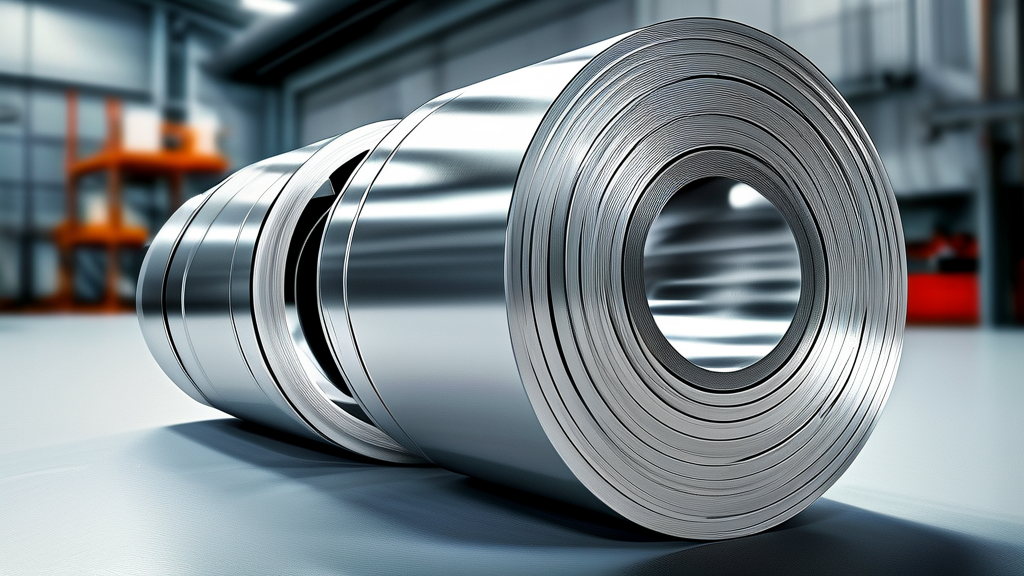
Precision-slit stainless steel coil refers to stainless steel strips that have been cut to exact widths using high-accuracy slitting equipment. Unlike conventional slitting, precision slitting employs advanced tension control, laser-guided alignment, and servo-driven slitters to achieve tight dimensional tolerances. The process begins with a master coil (typically 1,000–1,500 mm wide), which is unwound, leveled, and fed through a slitter head equipped with circular knives. The material is then rewound into narrower coils with minimal width variation and superior edge quality.

This method is critical in industries where dimensional accuracy directly impacts downstream processes—such as stamping, roll forming, and precision machining. The stainless steel used in these coils is typically austenitic (e.g., 304, 316), ferritic (e.g., 430), or duplex grades, selected based on corrosion resistance, mechanical strength, and formability requirements.
Key Applications Driving Demand
Precision-slit coils are indispensable in high-performance sectors:
- Automotive: Used in fuel lines, exhaust systems, and sensor housings.
- Electronics: Critical for EMI shielding, connectors, and precision springs.
- Medical Devices: Required for surgical instruments and implantable components.
- Aerospace: Employed in structural brackets and hydraulic tubing.
In each case, the width tolerance and edge quality directly influence assembly efficiency, product reliability, and scrap rates. For example, in roll forming, even a 0.05 mm deviation can cause misalignment in multi-stage tooling, leading to costly rework.
Width Tolerance: Standards, Measurement, and Industry Benchmarks
Defining Width Tolerance in Precision Slitting
Width tolerance refers to the allowable deviation from the nominal width of a slit coil. In precision slitting, this is typically expressed as ±X mm or ±X% of the nominal width. For example, a 100 mm wide coil with a ±0.05 mm tolerance must measure between 99.95 mm and 100.05 mm across its entire length.
Tighter tolerances (e.g., ±0.02 mm) are achievable with modern slitting lines that integrate real-time laser micrometers and closed-loop feedback systems. These systems continuously monitor width and adjust knife positioning dynamically.
Industry Standards and Specifications
Several international standards govern width tolerances:
- ASTM A480/A480M: Covers general requirements for flat-rolled stainless steel, including dimensional tolerances. For slit coils, it specifies tolerances based on thickness and width ranges.
- EN 10088-2: European standard for stainless steel flat products, with tighter tolerances for precision applications.
- JIS G 4305: Japanese Industrial Standard, often used in electronics and automotive supply chains.
For high-precision applications, manufacturers often exceed these standards. For instance, in semiconductor manufacturing, tolerances as tight as ±0.01 mm are common. The tolerance concept in engineering ensures interchangeability and functional reliability—critical in automated production lines.
Factors Affecting Width Consistency
- Knife Sharpness and Alignment: Dull or misaligned knives cause burring and width variation.
- Tension Control: Inconsistent unwind/rewind tension leads to “necking” or “edge wave.”
- Material Hardness and Thickness Uniformity: Variations in the master coil propagate into slit widths.
- Slitter Setup and Maintenance: Regular calibration of knife overlap, clearance, and arbor runout is essential.
Advanced slitting lines use laser-based width gauges and AI-driven predictive maintenance to minimize deviations.
Edge Quality: Characteristics, Defects, and Control Methods
What Constitutes High-Quality Slit Edges?
Edge quality in precision-slit coils is evaluated based on:
- Burr Height: The vertical protrusion of material beyond the cut edge. High-quality edges have burrs < 5% of material thickness.
- Edge Squareness: Deviation from 90°; ideally < 0.5°.
- Edge Condition: Smooth, free of cracks, tears, or roll-over.
- Edge Consistency: Uniform across the entire coil length.
Poor edge quality increases the risk of galling, tool wear, and safety hazards during handling.
Common Edge Defects and Their Causes
| Defect | Cause | Impact |
|---|---|---|
| Burrs | Dull knives, excessive clearance | Interference in assembly, safety risk |
| Edge Roll-Over | Low knife pressure, soft material | Poor fit in stamping dies |
| Tearing | Misaligned knives, high tension | Reduced formability, scrap |
| Edge Wave | Uneven tension, poor leveling | Misalignment in roll forming |
For example, in metal forming, burrs can cause die damage or inconsistent part dimensions, leading to high rejection rates.
Techniques to Optimize Edge Quality
- Knife Material and Geometry: Carbide or ceramic knives offer longer life and cleaner cuts.
- Clearance and Overlap Settings: Optimized based on material thickness and hardness. Typical clearance: 5–10% of thickness.
- Tension Zoning: Independent control of unwind, process, and rewind tension prevents edge deformation.
- Edge Deburring: Optional post-slitting processes (e.g., brushing, electrochemical polishing) for ultra-clean edges.
- In-Line Inspection: High-speed cameras and laser profilometers detect defects in real time.
Some manufacturers employ zero-clearance slitting for ultra-thin materials (< 0.1 mm), where traditional knife clearance would cause deformation.
The Interplay Between Width Tolerance and Edge Quality
How Tolerance Affects Edge Performance
Tighter width tolerances often require more precise knife alignment and higher machine rigidity. However, pushing tolerance limits can compromise edge quality if not managed properly. For instance, excessive knife pressure to maintain width may increase burr formation.
The optimal balance is achieved through process window optimization—a data-driven approach that identifies the ideal combination of knife clearance, tension, speed, and material properties.
Case Study: Automotive Sensor Housings
A Tier 1 automotive supplier required 0.8 mm thick 304 stainless steel coils, slit to 25.00 ±0.03 mm, with burr height < 0.02 mm. Initial production suffered from edge tearing due to high tension. By reducing tension by 15% and switching to ceramic knives, the supplier achieved both target tolerance and edge quality, reducing scrap from 8% to 0.5%.
This case underscores the importance of integrated process control—where width and edge parameters are monitored and adjusted simultaneously.
Best Practices for Sourcing and Quality Assurance
Selecting a Precision Slitting Supplier
When sourcing precision-slit coils, evaluate suppliers based on:
- Equipment Capabilities: Look for slitting lines with laser gauges, tension control, and in-line inspection.
- Quality Certifications: ISO 9001, IATF 16949 (automotive), or AS9100 (aerospace).
- Traceability: Full lot traceability from master coil to slit coil.
- Testing Protocols: Routine measurement of width, burr height, and edge squareness.
In-House Quality Verification
Even with certified suppliers, in-house verification is essential:
- Use digital micrometers for width checks at multiple points.
- Employ optical comparators or laser profilometers for edge analysis.
- Conduct destructive testing (e.g., cross-sectioning) to assess internal edge integrity.
Implementing a Statistical Process Control (SPC) system ensures long-term consistency.
Future Trends in Precision Slitting Technology
Automation and AI Integration
Next-generation slitting lines incorporate AI to predict tool wear, optimize knife settings, and detect anomalies in real time. Machine learning models trained on historical data can reduce setup time by up to 40%.
Sustainable Slitting Practices
Reducing material waste through tighter tolerances and edge control contributes to sustainability. Some manufacturers are adopting closed-loop recycling of edge trims, further minimizing environmental impact.
As demand for miniaturized, high-performance components grows, the role of precision-slit stainless steel coil will only expand—making mastery of width tolerance and edge quality a competitive necessity.
Related Products and Next Steps
Use these links to compare options and send RFQ with complete specs.