
Description
The Workhorse of Pressure Vessel Steels – With Real-World Performance
We’ve worked with ASTM A516 Gr. 70 for over a decade, and it’s the steel we recommend when clients need reliable performance in critical pressure applications. Unlike flashier alloys, this carbon steel delivers where it counts: consistent toughness at low temperatures, weldability that saves fabrication time, and strength that holds up under pressure—literally.
You’ll find it in everything from ammonia storage tanks in fertilizer plants to boiler drums in power stations. One offshore client recently used 80mm-thick plates for separator vessels, welding them without preheating thanks to the low carbon equivalent (typically 0.38–0.42). That’s the kind of practical advantage this steel offers.
What Makes It Different – Beyond the Spec Sheet
- Toughness in cold climates: Charpy V-notch tests show >27J at -40°C, crucial for Arctic LNG projects where brittle fracture is a real risk.
- Welding without the headaches: With manganese levels balanced at 0.79–1.30%, we’ve seen field welds pass X-ray inspection without post-weld heat treatment in many cases.
- Traceability you can trust: Every plate comes with full EN 10204 3.1 certification. We’ve had clients demand 3.2 certification for nuclear projects—no problem, just specify upfront.
The chemistry is tightly controlled: silicon (0.13–0.45%) improves deoxidization without hurting ductility, while sulfur and phosphorus stay below 0.035% to avoid hot-shortness. We normalize all plates over 50mm thickness—this isn’t always required, but we’ve seen it prevent banded structures in heavy sections.
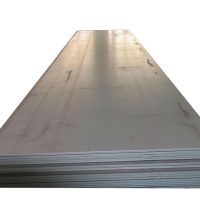
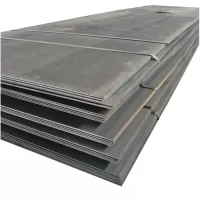
Thickness ranges from 6mm up to 200mm, with widths up to 4.5 meters. Need 12.7mm with 5° bevels? Or 150mm plates with UT testing to SA-435? We do that. Some competitors skimp on edge prep, but we chamfer all plates to prevent coating issues in service.
Why Buy From Us?
Being a Chinese mill with direct control over production means two things: cost efficiency without cutting corners, and flexibility in custom orders. We’ve supplied A516 Gr. 70 to German engineering firms, Saudi petrochemical projects, and even a floating LNG plant in Malaysia.
Whether you need 50 tons or 5,000, we’ll discuss:
– Optimal rolling reduction ratios for your thickness
– Whether shot blasting (Sa2.5) is needed for your coating system
– How to sequence heavy plate deliveries to match your fabrication timeline
Reach out with your project details—we’ll share real case studies, not just a catalog. And if A516 Gr. 70 isn’t quite right, we’ll suggest alternatives like A537 Cl. 1 or even A387 for higher temps. That’s what we’d want if we were in your shoes.