
Generally, a magnet should not strongly stick to 304 stainless steel, especially if it’s in the annealed (softened) condition. However, the reality can be a bit more complex.


Here’s the explanation:
- Austenitic Structure: Type 304 stainless steel belongs to the austenitic family. In its stable, fully annealed state, its primary crystal structure is austenite (face-centered cubic). Austenite is non-magnetic (paramagnetic, meaning it’s very weakly attracted to strong magnetic fields but doesn’t retain magnetism and isn’t attracted to a common magnet).
- Effect of Cold Working: When 304 stainless steel is processed through methods like bending, forming, drawing (like in making wire or springs), or even sometimes heavy polishing, this cold work can transform some of the austenite into martensite. Martensite has a different crystal structure (body-centered tetragonal or cubic) which is ferromagnetic.
- Resulting Magnetism: Because of this potential transformation, cold-worked 304 stainless steel can become slightly magnetic. The more cold work applied, the more martensite forms, and the stronger the attraction to a magnet will be. This is particularly noticeable at sharp bends, edges, or in heavily drawn wire.
- Welding Effect: Welding can also affect the magnetic properties. The rapid heating and cooling cycle, along with potential minor changes in composition (e.g., slight ferrite formation in the weld metal), can sometimes make the weld area slightly magnetic, even if the base metal is not.
Practical Test:
If you hold a common household magnet to a piece of 304 stainless steel:
- Annealed Sheet/Plate: You should feel little to no attraction.
- Sink Basin/Countertop (Formed): You might feel a very slight pull, especially near corners or edges where forming was significant.
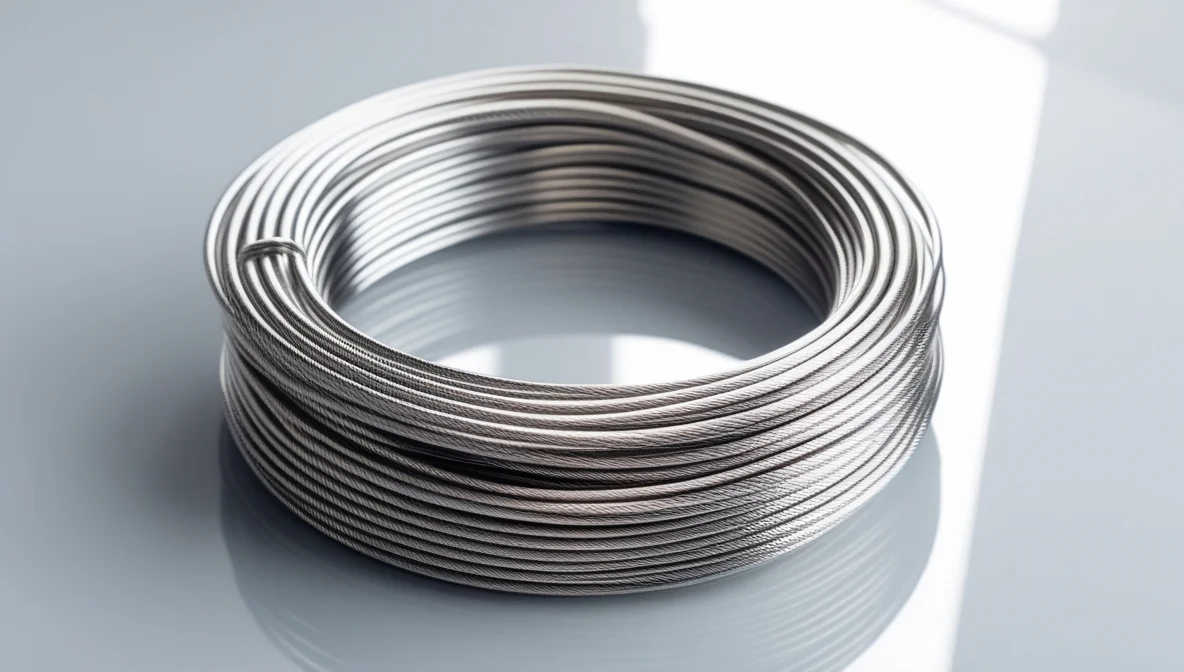
- 304 Stainless Steel Wire/Spring: Due to the heavy cold drawing, it will likely exhibit a noticeable attraction to a magnet, though usually much weaker than the pull to carbon steel or ferritic/martensitic stainless steels (like the 400 series).
Conclusion: While ideally non-magnetic, 304 stainless steel often becomes slightly magnetic due to cold working. A strong magnetic pull usually indicates it’s not 304 (more likely a 400-series stainless or plated carbon steel), but a slight attraction doesn’t rule out 304, especially if the part has been formed or worked.
Should a magnet stick to 304 stainless steel? — This article provides a practical buyer‑focused overview with specifications, selection tips, and on‑site considerations. Explore related topics: blog.
Key Specifications and Standards
- Standards: ASTM / EN / JIS (e.g., ASTM A240/A36, EN 10088/10025, JIS G4304/G3131).
- Surface options: 2B, BA, No.4, HL, mirror; galvanized (electro / hot‑dip).
- Processing: hot‑rolled, cold‑rolled, annealed & pickled, welded or seamless.
- Typical services: slitting, shearing, cut‑to‑length, drilling, beveling, deburring.
- Documentation: MTC, CO, packing list with net/gross weight and heat numbers.
Typical Applications
Construction, machinery, automotive, energy, enclosures and fencing, food equipment (for stainless), and general fabrication. Match grade and finish to corrosion, strength, and appearance requirements.
Selection Guide
- Use certified material with Mill Test Certificate (MTC).
- Confirm standards (ASTM/EN/JIS) and tolerances per drawing.
- Match surface finish to application (2B/BA/No.4/galvanized).
- Specify dimensions and acceptable deviation upfront.
- Plan packaging and corrosion protection for transit.
Processing, Packaging and Logistics
We adopt edge protection, waterproof wrapping, rust‑inhibiting paper, fumigated pallets, and strapping suitable for sea freight. Loading photos and weight lists are provided for each shipment.
FAQs
Q: What lead time can I expect?
A: Typically 7–15 days ex‑works for standard sizes; custom processing may extend the schedule.
Q: Can you provide cut‑to‑size service?
A: Yes. We slit, shear, cut, drill, bevel and deburr to drawing to reduce waste and speed installation.
Q: How do you ensure quality?
A: Incoming inspection, process control, and final inspection with traceable heat numbers; third‑party inspection is available.
Q: Do you support small trial orders?
A: We support pilot quantities with consolidated shipping to control cost.
All values are typical and for guidance only; confirm with the datasheet and purchase order before production.
Related products: view details.
Related products: view details.