Steel Mill Factory Inspection Checklist: What to Look for During Supplier Site Visit in China
On-site inspections are a non-negotiable step in sourcing steel from Chinese manufacturers. While certifications and test reports provide a baseline, they often fail to reveal operational realities—especially in a market where documentation can be inconsistent or selectively presented. Relying solely on paper credentials exposes procurement teams to significant risks: substandard material properties, production bottlenecks, non-compliance with environmental regulations, and supply chain disruptions. A structured, expert-led factory audit mitigates these threats by validating actual capabilities against claimed performance. This checklist equips buyers with a systematic framework to evaluate infrastructure, quality systems, compliance, and logistics readiness—ensuring that supplier selection is based on observable evidence, not promises.
Pre-Visit Preparation: Setting the Foundation for a Successful Inspection
Define Inspection Objectives and Scope
Before stepping onto the factory floor, clearly define what you need to verify. Are you sourcing structural steel for high-rise construction, rebar for infrastructure projects, or specialty alloys for precision applications? Each use case demands different validation criteria. Align your inspection goals with project-specific requirements—whether it’s maximum monthly output, adherence to ASTM or EN standards, or compatibility with just-in-time delivery schedules. Determine whether your priority is assessing production capacity, evaluating quality management systems, confirming environmental compliance, or a comprehensive review of all three.
Review Supplier Documentation in Advance
Request and analyze key documents at least two weeks prior to the visit. Scrutinize certifications such as ISO 9001 (quality management), ISO 14001 (environmental management), and ISO 45001 (occupational health and safety). Verify that production licenses and export permits are current and match the facility’s registered name and address. Examine recent Material Test Certificates (MTCs) and Mill Test Reports (MTRs) for consistency in chemical composition and mechanical properties. Discrepancies between reported data and actual performance are common red flags—early review allows time to probe inconsistencies during the site visit.
Assemble the Right Inspection Team
An effective inspection requires multidisciplinary expertise. Include a metallurgist to assess material integrity, a quality engineer to evaluate testing protocols, and a supply chain specialist to analyze logistics workflows. Whenever possible, engage a local bilingual inspector with deep knowledge of China’s steel industry practices. They can navigate cultural nuances, interpret technical jargon accurately, and identify subtle signs of non-compliance that foreign auditors might overlook.
Facility Infrastructure and Production Capacity Assessment
Evaluate Plant Layout and Workflow Efficiency
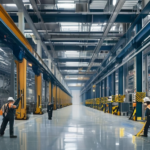
Observe the entire production flow—from raw material intake to finished product dispatch. A well-designed layout minimizes cross-contamination between steel grades and reduces handling time. Look for clear segregation zones: raw scrap or iron ore storage should be physically separated from semi-finished billets and final products. Bottlenecks often manifest as congested staging areas or repeated manual transfers—signs of inefficient workflow design that can compromise delivery timelines.
Verify Key Production Equipment
Confirm the presence and operational condition of core assets. Identify whether the mill uses blast furnaces (BF), basic oxygen furnaces (BOF), or electric arc furnaces (EAF)—each implying different cost structures, environmental impacts, and material capabilities. Inspect rolling mills: tandem mills offer higher throughput for standard sections, while reversing mills provide flexibility for custom dimensions. Check the condition of finishing stands, cooling beds, and straightening equipment. Outdated or poorly maintained machinery increases the risk of dimensional inaccuracies and surface defects.
Assess Production Capacity vs. Claimed Output
Cross-reference the supplier’s stated annual capacity with observable evidence. Review shift logs, maintenance records, and utility consumption data (e.g., electricity usage per ton produced). A facility claiming 500,000 tons/year but operating only one shift with frequent downtime is likely overstating capability. Identify single points of failure—such as reliance on a single furnace or crane system—that could halt production during breakdowns. True capacity is not just nameplate rating; it’s sustainable output under real-world conditions.
Quality Management Systems and In-Process Controls
Inspect In-House Laboratory Capabilities
A credible steel mill must have a fully equipped in-house lab. Verify the presence of Optical Emission Spectrometers (OES) for precise chemical analysis and mechanical testing rigs for tensile strength, hardness (Brinell/Rockwell), impact resistance (Charpy V-notch), and bend tests. Check calibration certificates for all instruments—expired calibrations invalidate test results. Ensure technicians hold recognized certifications (e.g., NDT Level II) and follow standardized testing procedures aligned with international norms like ASTM E8 or ISO 6892.
Review Process Control Protocols
Demand access to Standard Operating Procedures (SOPs) for every critical stage: melting, continuous casting, hot rolling, and heat treatment. Observe whether operators follow documented protocols or rely on informal practices. Look for real-time monitoring systems that track temperature profiles, reduction ratios, and cooling rates—key determinants of final microstructure and mechanical properties. Advanced facilities use Statistical Process Control (SPC) charts or digital dashboards to detect deviations before they result in non-conforming batches.
Traceability and Batch Management
Robust traceability is essential for quality assurance and recall management. Confirm that each heat of steel is assigned a unique heat number that follows the material from melt shop to finished product. The system should allow immediate isolation of non-conforming batches without shutting down entire production lines. Assess documentation integrity: digital records with audit trails are preferable to paper-based systems prone to loss or alteration. Ask to trace a recent shipment backward through the process—this reveals the depth and reliability of their tracking system.
Compliance, Safety, and Environmental Standards
Workplace Safety Observations
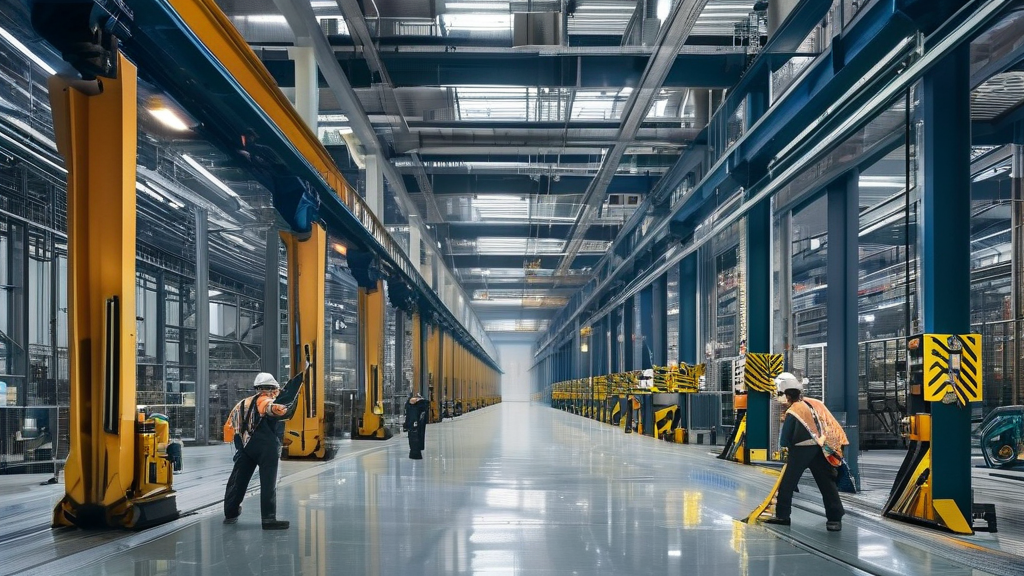
Safety culture reflects operational discipline. During the walkthrough, note whether personal protective equipment (PPE)—hard hats, cut-resistant gloves, safety goggles—is consistently worn in high-risk zones like furnace areas and rolling mills. Check for proper machine guarding, functional emergency stop buttons, and documented lockout/tagout (LOTO) procedures. Poor housekeeping—oil spills, blocked walkways, or inadequate ventilation—signals lax safety management and increases accident risk.
Environmental Compliance Indicators
China enforces strict environmental regulations, especially in heavy industries. Verify the presence and operation of dust collection systems on furnaces and rolling lines. Inspect wastewater treatment facilities and look for discharge monitoring reports. Request evidence of recent government environmental inspections; penalties or corrective action notices indicate compliance gaps. Mills investing in pollution control demonstrate long-term sustainability and reduce the risk of production halts due to regulatory violations.
Labor Practices and Social Compliance
Ethical sourcing extends beyond product quality. Review payroll records to confirm compliance with Chinese labor laws regarding working hours, overtime compensation, and minimum wage. Observe worker conditions: are rest areas provided? Is there evidence of forced or child labor? While union representation is less common in private mills, legitimate facilities should have transparent grievance mechanisms. Social compliance failures can trigger reputational damage and import restrictions in Western markets.
Logistics, Packaging, and Export Readiness
Warehousing and Inventory Management
Inspect storage conditions for finished products. Corrosion-sensitive items like galvanized steel or high-strength alloys should be stored in climate-controlled environments with humidity regulation. Verify FIFO (First-In, First-Out) implementation through stock rotation logs and physical labeling. Poor inventory management leads to material degradation and shipment delays.
Packaging and Labeling Standards
Packaging must meet international shipping standards to prevent damage during transit. Check that bundles are securely strapped, protected with anti-rust paper or VCI film, and clearly labeled with heat numbers, dimensions, grade (e.g., ASTM A36, S355JR), and destination markings. Inconsistent or missing labels complicate customs clearance and increase the risk of material mix-ups at job sites.
Export Documentation and Customs Readiness
Confirm the supplier’s experience with export documentation: Certificate of Origin (COO), commercial invoices, packing lists, and bills of lading. Assess their familiarity with destination-country regulations—for example, U.S. buyers must ensure compliance with antidumping and countervailing duty (AD/CVD) requirements. Mills accustomed to global trade will have dedicated export teams and streamlined customs processes, reducing clearance delays.
Conclusion: Turning Inspection Insights into Actionable Decisions
A thorough site inspection reveals more than capability—it uncovers risk. Red flags such as outdated equipment, missing certifications, inconsistent traceability, or poor safety practices should prompt deeper scrutiny or disqualification. Conversely, a well-documented, transparent operation signals a reliable partner. Use inspection findings to negotiate terms, request corrective actions, or structure phased trial orders. In high-stakes procurement, the factory visit isn’t just verification—it’s your first line of defense against supply chain failure.