The common manufacturing processes for thick wall stainless steel tubing include:


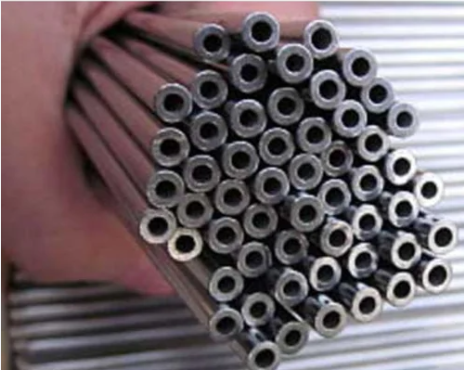
- Seamless Tube Rolling:
- This process involves feeding a solid billet of stainless steel through a series of rolling stands to gradually reduce the diameter and increase the wall thickness.
- The billet is rotated and passed through multiple rolling stands to achieve the desired tube dimensions and wall thickness.
- Seamless tube rolling results in a uniform, high-quality tube with excellent mechanical properties.
- Welded Tube Production:
- In this process, a flat stainless steel strip is formed into a tubular shape and the longitudinal edges are welded together.
- The welded tube is then reduced in diameter and the wall thickness is increased through a series of rolling and drawing operations.
- Welded tube production can be more cost-effective than seamless tube rolling, especially for larger diameter tubes.
- Extrusion:
- Extrusion involves forcing a solid billet of stainless steel through a die to produce a continuous length of tubing.
- The extrusion process can achieve high production rates and is suitable for manufacturing thick wall stainless steel tubing.
- Extrusion typically results in a seamless tube with consistent wall thickness and mechanical properties.
- Drawing:
- Tube drawing involves pulling a length of tubing through a die to reduce the diameter and increase the wall thickness.
- This process can be repeated multiple times to achieve the desired dimensions and wall thickness.
- Drawing is often used in combination with other processes, such as seamless tube rolling or welded tube production, to further refine the tube’s properties.
Regardless of the specific manufacturing process, the key requirements for producing thick wall stainless steel tubing are precise control over the material composition, tight dimensional tolerances, and careful management of the various forming and finishing operations.
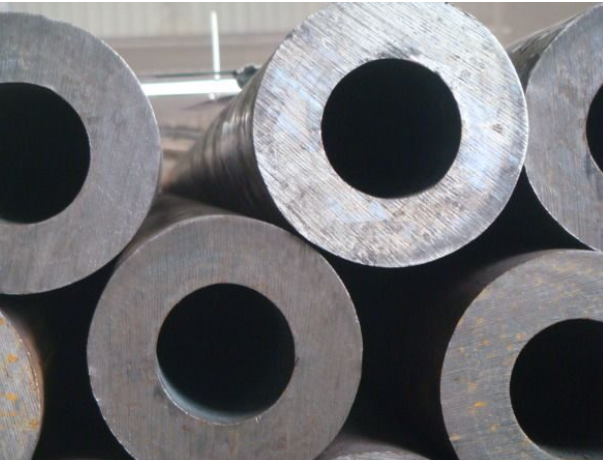
The choice of manufacturing process will depend on factors such as the tube size, wall thickness, production volume, and cost considerations. Manufacturers often utilize a combination of these techniques to optimize the production of thick wall stainless steel tubing for their specific applications.
What are the common manufacturing processes for thick-walled stainless steel pipes? — This article provides a practical buyer‑focused overview with specifications, selection tips, and on‑site considerations. Explore related topics: blog.
Key Specifications and Standards
- Standards: ASTM / EN / JIS (e.g., ASTM A240/A36, EN 10088/10025, JIS G4304/G3131).
- Surface options: 2B, BA, No.4, HL, mirror; galvanized (electro / hot‑dip).
- Processing: hot‑rolled, cold‑rolled, annealed & pickled, welded or seamless.
- Typical services: slitting, shearing, cut‑to‑length, drilling, beveling, deburring.
- Documentation: MTC, CO, packing list with net/gross weight and heat numbers.
Typical Applications
Construction, machinery, automotive, energy, enclosures and fencing, food equipment (for stainless), and general fabrication. Match grade and finish to corrosion, strength, and appearance requirements.
Selection Guide
- Use certified material with Mill Test Certificate (MTC).
- Confirm standards (ASTM/EN/JIS) and tolerances per drawing.
- Match surface finish to application (2B/BA/No.4/galvanized).
- Specify dimensions and acceptable deviation upfront.
- Plan packaging and corrosion protection for transit.
Processing, Packaging and Logistics
We adopt edge protection, waterproof wrapping, rust‑inhibiting paper, fumigated pallets, and strapping suitable for sea freight. Loading photos and weight lists are provided for each shipment.
FAQs
Q: What lead time can I expect?
A: Typically 7–15 days ex‑works for standard sizes; custom processing may extend the schedule.
Q: Can you provide cut‑to‑size service?
A: Yes. We slit, shear, cut, drill, bevel and deburr to drawing to reduce waste and speed installation.
Q: How do you ensure quality?
A: Incoming inspection, process control, and final inspection with traceable heat numbers; third‑party inspection is available.
Q: Do you support small trial orders?
A: We support pilot quantities with consolidated shipping to control cost.
All values are typical and for guidance only; confirm with the datasheet and purchase order before production.
Related products: view details.
Related products: view details.