
Steel usually arrives in good condition and then spends weeks or months waiting for production. What happens during that wait decides whether fabrication starts with clean, flat material or with surface rust, edge staining and handling damage. Storage is not a warehouse detail. It is the first stage of quality control.
This guide covers the practical rules for indoor and outdoor steel storage, the protection methods that actually work, and the common mistakes that quietly cost fabricators time and money.
Why Storage Decides the Condition of Your Steel
Carbon steel, galvanized steel and stainless steel all react differently to moisture, but they share one weakness: a wet surface held against another wet surface. Where water sits and cannot drain or dry, corrosion starts. Where steel sits on damp ground or under a sweating tarpaulin, the surface breaks down even in a mild climate.
Once rust appears, it must be removed before painting, welding or forming. That means extra labour, extra abrasive or chemical cost, and sometimes material that is downgraded or scrapped. Preventing rust is almost always cheaper than removing it.
The Three Enemies: Moisture, Condensation and Time
- Moisture: rain, splash, ground contact and wash-down water.
- Condensation: warm humid air meeting a cooler steel surface, which is worst in coastal, tropical and seasonal climates.
- Time: the longer material is stored, the more chances it has to get wet and stay wet.
Indoor storage controls all three. Outdoor storage can work, but it requires deliberate drainage, airflow and short storage windows.
Indoor Warehouse Storage: The Preferred Method
Racking and clearance
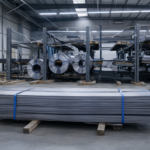
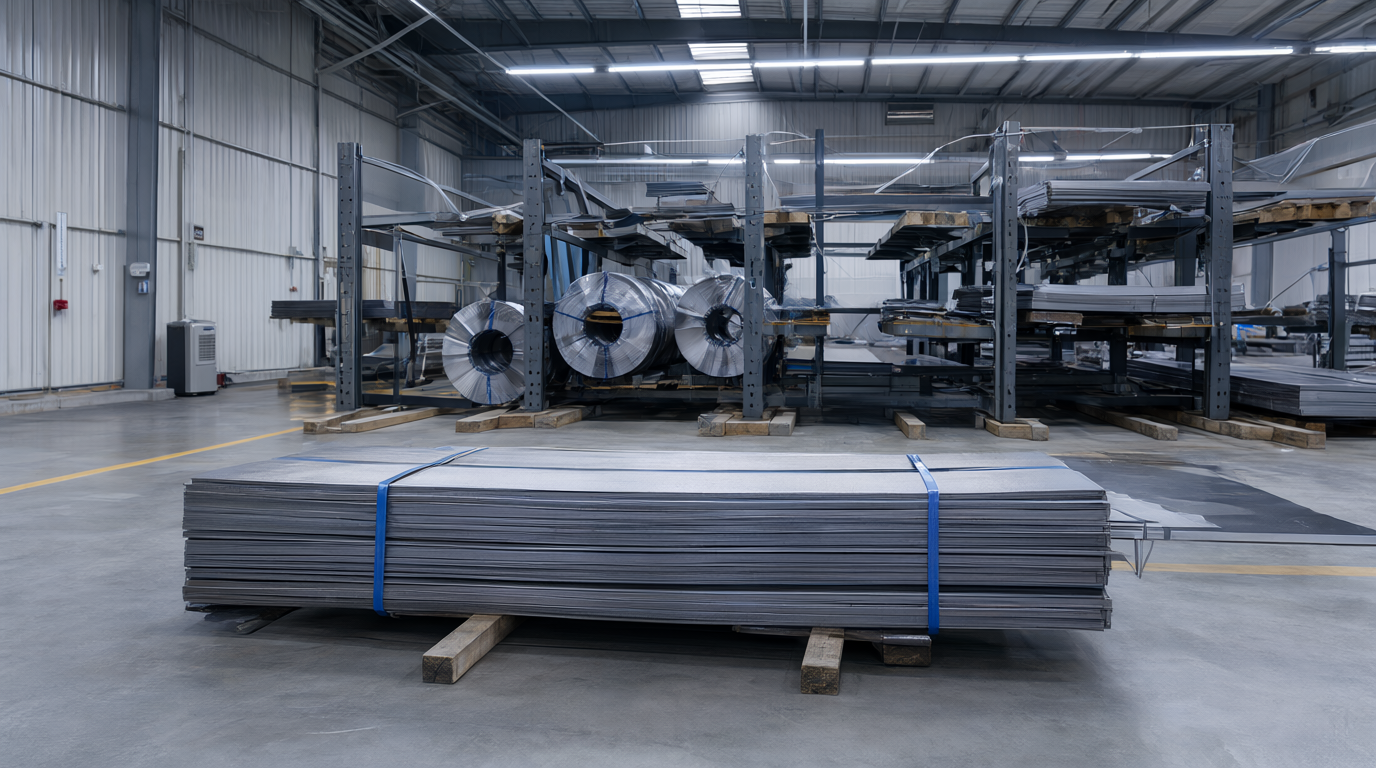
Store material on racks, shelves or dunnage, never directly on a concrete floor. Concrete can wick moisture and hold it against the bottom of a stack. Keep stacks at least 100 to 150 mm off the floor and leave a gap of 300 mm or more from external walls, which can sweat with temperature changes.
Ventilation and temperature
Still, humid air is the enemy. Provide natural or mechanical ventilation so air can move around the stacks and dry any condensation. In humid or coastal locations, use dehumidifiers and monitor relative humidity, keeping it low enough that steel surfaces do not stay wet.
Stacking and interleaving
Stack flat, aligned and stable. For stainless and polished sheet, interleave with paper or protective film to prevent scratching and to keep metal surfaces from touching. Keep heavy plates low and light sheets high, and never overload a rack so that bundles sag or shift.
Outdoor Yard Storage: Doing It Without Ruining the Surface
Dunnage and ground clearance
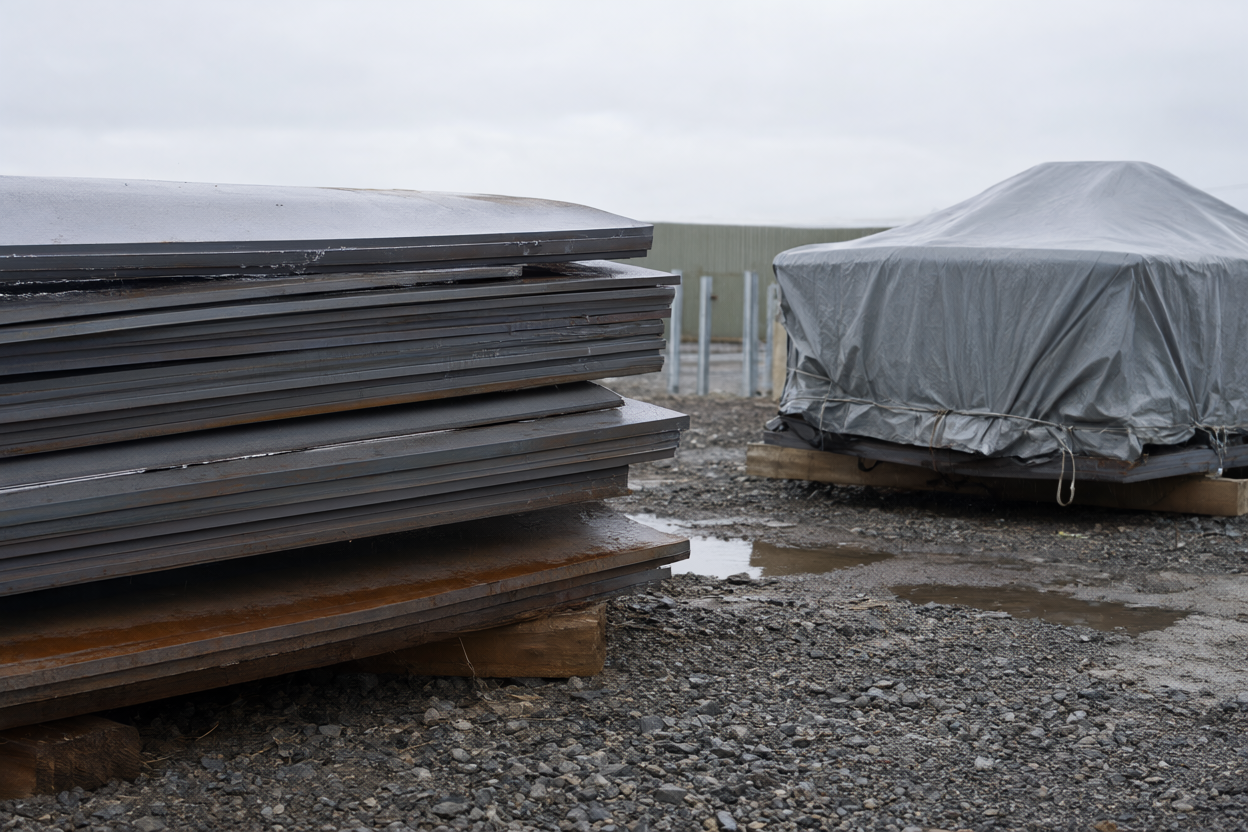
In a yard, the steel must be lifted clear of the ground on timber or concrete sleepers. This keeps the bottom of the stack out of standing water and allows air to circulate underneath. Stacks placed directly on wet gravel or soil will rust from the bottom up.
Slope, drainage and covers
Tilt stacks slightly so water runs off rather than pooling on the top surface. Grade the yard so water drains away from storage areas. Use covers that shed water and allow airflow, and keep the ground around the stack clear of puddles and vegetation.
What not to do with tarpaulins
A tarpaulin draped directly over steel and sealed at the bottom is a moisture trap. Condensation forms underneath, the steel stays wet, and the cover hides the problem until the material is unwrapped. If you must cover steel, leave ventilation gaps and raise the cover off the metal surface, or use breathable covers.
Short-Term vs Long-Term Protection
| Storage duration | Recommended protection |
|---|---|
| A few days to two weeks | Indoor racking, floor clearance, good ventilation |
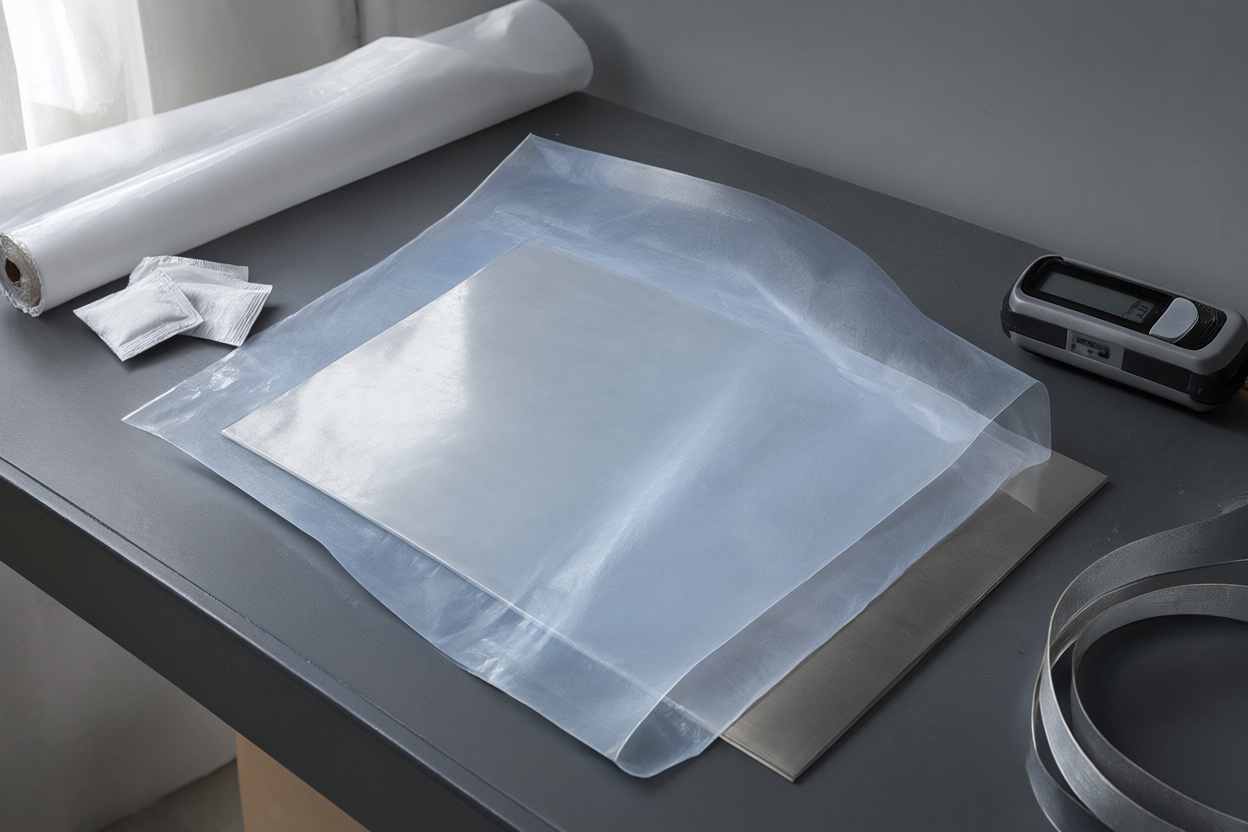
| Two weeks to three months | Interleaving paper, light oil, VCI film, dry indoor area |
| Three to twelve months | VCI film or wrappers, desiccants, sealed bundles, humidity control |
| Over twelve months or export | Preservative oil, VCI system, desiccants, strapped and sealed bundles |
Handling and Housekeeping Rules
- Use cranes, magnets and lifting beams correctly, with spreaders and soft slings, to avoid edge and surface damage.
- Never drag sheets across each other or across concrete.
- Keep the store clean. Dust, grit and metal particles hold moisture and cause scratches.
- Follow first-in, first-out so older material is used before it ages in the rack.
- Keep stainless and carbon steel clearly separated to avoid iron contamination and galvanic contact.
Inspection Before Material Enters Production
Before releasing stored steel to the shop, check the bottom sheets of each stack, the cut edges and the banding contact points, where corrosion usually begins. Look for white rust on galvanized surfaces, tea staining on stainless, and red rust on carbon steel. Record the condition and clean or reject material before it reaches a machine.
FAQ
Can steel be stored outside without rusting?
Yes, for limited periods, if it is raised on dunnage, sloped for drainage, kept clear of standing water and covered in a way that allows airflow. Long-term outdoor storage still carries much higher risk than indoor storage.
Does galvanized steel need special storage?
Galvanized steel resists rust well but can develop white rust (zinc oxide) when moisture is trapped between tightly stacked sheets. Keep it dry and ventilated, and avoid sealed, wet stacks.
How do I stop stainless steel from tea staining in storage?
Keep it clean and dry, avoid contact with carbon steel, and do not store it where chlorides or salt spray can reach it. Interleaving paper and protective film also reduce surface damage.
How long can steel stay in storage?
With dry indoor storage and light protection, several months is normally fine. Beyond that, use VCI protection and desiccants, and re-inspect periodically.
Final Buying Advice
Storage planning starts with the purchase order. Order the surface condition and protection your schedule actually needs, and confirm whether material will be consumed quickly or held for months. BaoLi supplies stainless steel, galvanized steel and carbon steel with protective film, interleaving paper and export packing options. For storage and packing advice, use Contact Us.
Related pages: Stainless Steel | Carbon Steel | Services | Contact Us